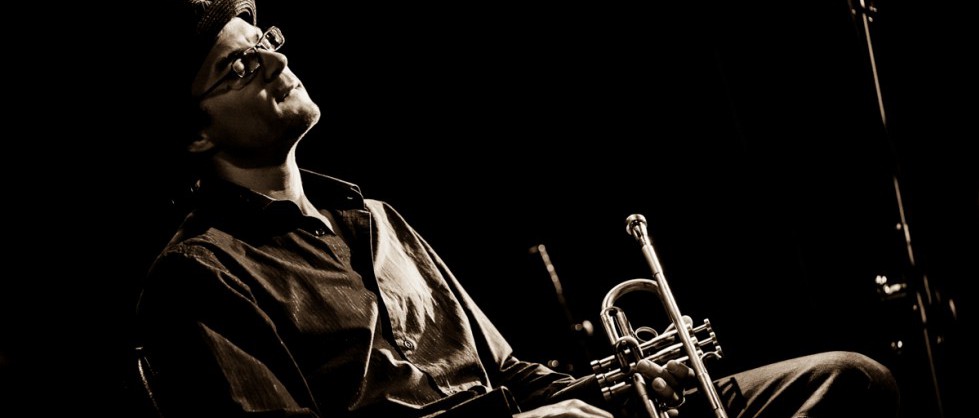
Here’s a polished, research-driven artist bio for jazz trumpeter Mark Edward Rapp—written with the sweep and sparkle of a GRAMMY® program profile.
Mark Rapp — Trumpeter • Composer • Cultural Catalyst
South Carolina–born trumpeter Mark Edward Rapp is a force who bridges restless creativity on the bandstand with transformative leadership off it. A graduate of Winthrop University (B.M.) and the University of New Orleans (M.M.), where he studied with the legendary Ellis Marsalis, Rapp refined his sound in New Orleans, honed it in New York, and has since carried it onto marquee stages around the world.1
Rapp’s horn speaks with lyric intensity and modern bite—a voice documented across acclaimed releases and standout collaborations. His debut, Token Tales (2009), signaled a composer-leader with a storyteller’s sense of flow. Two years later, his Lou Donaldson tribute with his band Melting Pot, Good Eats, drew praise for fusing greasy soul-jazz swagger with contemporary improvisation.2
A versatile collaborator, Rapp co-leads The Song Project with guitarist Derek Lee Bronston and appears on Walt Disney Records’ Disney Jazz: Everybody Wants To Be a Cat (Vol. 1)—a star-studded compilation featuring Roy Hargrove, Dave Brubeck, Esperanza Spalding, Joshua Redman and more—where Rapp’s track closes the album. His credits also include work with Branford Marsalis, Wess “Warmdaddy” Anderson, and Don Braden.3
Onstage, Rapp’s passport reads like a jazz atlas: Dizzy’s Club at Jazz at Lincoln Center, Blue Note NYC, Yoshi’s, Snug Harbor, and festivals from Newport and New Orleans to Europe. Recent features include headlining sets with the Mark Rapp Group and appearances spotlighted by major jazz outlets.4
Beyond performance, Rapp is a builder. He is the founder and executive director of the ColaJazz Foundation, a Governor’s Award–winning nonprofit that has reshaped South Carolina’s jazz ecosystem through festivals, concerts, education, and advocacy. Under his leadership, ColaJazz has grown from a local spark into a statewide engine for access, artist opportunity, and cultural pride. He also hosts ColaJazz Presents and the micro-series Rapp on Jazz for South Carolina Public Radio, amplifying the music’s stories and its South Carolina roots.5
Rapp’s community impact has earned national recognition. In 2018 he was designated Jazz Ambassador of Columbia and the State of South Carolina by the S.C. House of Representatives. In 2025, the Jazz Journalists Association named him a Jazz Hero, honoring a decade-plus of tireless service to audiences, students, and fellow artists.6
Today, Rapp’s work—whether a blistering chorus over a hard-bop burner, a cinematic reimagining of a classic melody, or a classroom moment that turns curiosity into confidence—radiates one through-line: jazz as a living language of possibility. From Florence to New Orleans to New York and back, he has proven that a trumpet, a vision, and a community can rewrite what’s possible for an arts scene and the people it serves.7
Selected Credits & Milestones (highlights)
- Education: B.M. Winthrop University; M.M. Jazz Studies, University of New Orleans (studied with Ellis Marsalis).
- Recordings as leader/co-leader: Token Tales (2009); Good Eats (Mark Rapp’s Melting Pot, 2011); The Song Project releases.
- Compilation feature: Disney Jazz: Everybody Wants to Be a Cat (Vol. 1) (Walt Disney Records, 2011) — closing track contribution.
- Stages & festivals: Dizzy’s Club, Blue Note NYC, Yoshi’s, Jazz Standard; Newport Jazz Festival; New Orleans Jazz & Heritage Festival; international dates.
- Media & advocacy: Host/producer with South Carolina Public Radio (ColaJazz Presents, Rapp on Jazz).
- Leadership: Founder/Executive Director, ColaJazz Foundation; recipient of the South Carolina Governor’s Award for the Arts (organization, 2021).
- Honors: Jazz Ambassador (State of South Carolina), 2018; Jazz Journalists Association Jazz Hero, 2025.
Sources & Further Reading
Mark was named one of the “top emerging trumpeters” in 2008 by Downbeat Magazine, featured on a Travel Channel documentary and has played with such diverse artists as Branford Marsalis to Hootie and the Blowfish. He has played sold out shows at the Blue Note (NY), Joe’s Pub, Yoshi’s (San Fran) and such venues as Blues Alley (D.C.), the JVC Newport Jazz Festival, Dizzy’s at Jazz Lincoln Center, JazzTime Festival (Croatia), Jazzland (Vienna), Jazz Standard (New York) and more.
“Rapp lives up to his billing as one today’s exciting young trumpeters.” – AllAboutJazz.comMark has 4 records as a leader including his critically-loved debut Token Tales (2009), Braden-Rapp: The Strayhorn Project (2010) with saxophone great Don Braden, GRAMMY-nominated pianist Gerald Clayton and vocalist Sachal Vasandani, TSP’s Art of the Song, vol.1 (2010) – an industry first “Applum” – and his tribute to Lou Donaldson entitled Good Eats (2011) again features Don Braden and some European peers on Hammond B3 Organ, drums and guitar.. Disney’s CD Everybody Wants to be a Cat features Mark on it’s closing track. This CD includes artists Roy Hargrove, Dave Brubeck, Esperanza Spalding, The Bad Plus, Joshua Redman and more.
Having lived in New Orleans, New York and Europe, Mark now resides in South Carolina often traveling back-and-forth to New York, NY and is constantly performing in support of his various projects including Token Tales, The Strayhorn Project, TSP, Psycho Jazz Contingency and The South Carolina Jazz Orchestra. Mark plays a custom J. Landress trumpet with a Monette B2GS3 88 mouthpiece and a Kanstul flugelhorn with a Brass Research mouthpiece.
Read the jazzreview.com interview Download the PDF one-sheet
An excerpt from How Jazz Trumpeters Understand Their Music: Twenty-Seven Interviews
Edwin Mellen Press, 2010
There’s a new breed of young trumpeters coming down the road. These new young lions have studied the playing and music of bop and hard bop masters such as Dizzy Gillespie, Clifford Brown, Freddie Hubbard, Lee Morgan and Kenny Dorham, among others. Having looked at the innovations of forward-thinkers like Don Cherry, Lester Bowie and Dave Douglas, the young firebrands have also not neglected the funk, jazz-rock, soul and fusion of artists like Miles Davis, Stevie Wonder and Herbie Hancock. The resultant music they create melds and brings together the radio music of their youth with the history of their horn to find fresh ways to approach and fashion a style of playing more oriented toward groove without losing modern approaches to upper chordal harmonic structures so prevalent in the jazz music of the late 20th century. Perhaps one of the best examples of the direction being taken by this new breed is played by Mark Rapp.
Perhaps one of the best examples of the direction being taken by this new breed is played by Mark Rapp.
Rapp enrolled in Winthrop University in South Carolina, studying trumpet with Dr. Ian Pearson. After graduating, and following discussions with Wynton Marsalis, Rapp moved to New Orleans to study jazz under Ellis Marsalis while earning a Masters in Jazz from the University of New Orleans. Five years later and after performing extensively throughout the city, Rapp moved to New York. Finding the initial year there a tough go, his perseverance paid off and the now mid-30s year-old musician has been turning heads ever since.
The critical praise has, as one would expect from the above, been great. In 2007 Down Beat listed Rapp on their very short list of, “Top emerging jazz trumpeters.” JazzTimes also had great praise, writing,
“(Rapp) has his own way of defining jazz, which keeps its standard principles… while delving into the experimental side.”

There’s a new breed of young trumpeters coming down the road. These new young lions have studied the playing and music of bop and hard bop masters such as Dizzy Gillespie, Clifford Brown, Freddie Hubbard, Lee Morgan and Kenny Dorham, among others. Having looked at the innovations of forward-thinkers like Don Cherry, Lester Bowie and Dave Douglas, the young firebrands have also not neglected the funk, jazz-rock, soul and fusion of artists like Miles Davis, Stevie Wonder and Herbie Hancock. The resultant music they create melds and brings together the radio music of their youth with the history of their horn to find fresh ways to approach and fashion a style of playing more oriented toward groove without losing modern approaches to upper chordal harmonic structures so prevalent in the jazz music of the late 20th century. Perhaps one of the best examples of the direction being taken by this new breed is played by Mark Rapp.